Best Projector Screens: The Surface Is Half the Picture
Related: How to Set Up a Projector: Placement, Focus, and the Perfect Picture
I've spent fifteen years installing projectors, and I've lost count of the clients who dropped three grand on a great projector, then mounted it on a bare white wall and wondered why the picture looked flat. The screen is half the picture. Literally. A good screen can make a ~$500 projector look like an ~$800 one. A bad screen can make a ~$2,000 projector look like a ~$200 one.
My own basement setup runs a 120-inch screen, and after two years with my current screen, I've got opinions. Strong ones. Let's talk about what actually matters when you're shopping for the best projector screen.
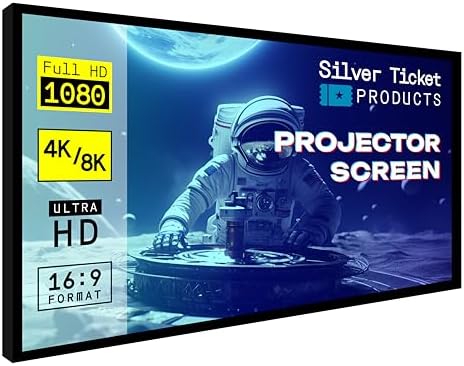
Silver Ticket Products STR Series 6 Piece White 1.1 Gain 120" Diagonal 16:9 Format Projection Screen, Aluminum Frame, Wall Mounted, 109.25x63.625 inches STR-169120
Best value under $200. Fixed frame, solid build, good gain
Visit on Amazon →
Elite Screens Aeon Series, 110-inch 16:9, 8K / 4K Ultra HD Home Theater Fixed Frame EDGE FREE Borderless Projector Screen, CineWhite UHD-B Front Projection Screen, AR110WH2
Great for ambient light rooms, rigid aluminum frame
Visit on Amazon →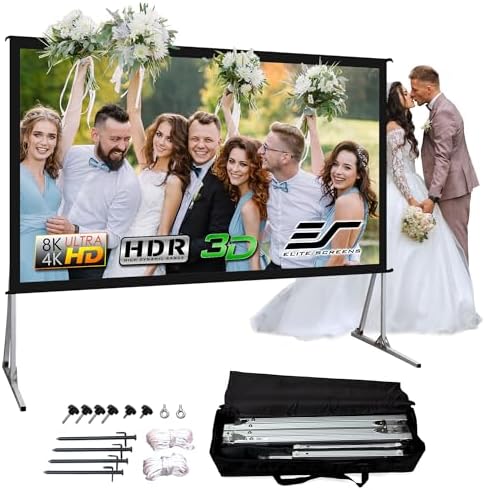
Elite Screens Yard Master 2, 120-inch Outdoor Portable Fast Folding Projector Screen w/ Stand 16:9, 8K 4K Ultra HD 3D Movie Theater Cinema REAR Projection, OMS120HR3, US Based Company 2-YEAR WARRANTY
Perfect for backyard movies, sets up in 5 minutes
Visit on Amazon →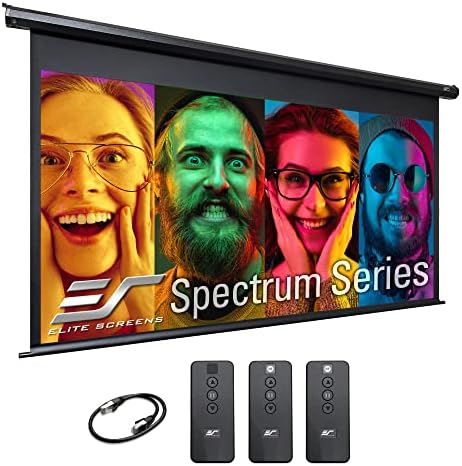
Elite Screens Spectrum, 100-inch Diag 16:9, Electric Motorized 4K/8K Ready Drop Down Projector Screen, ELECTRIC100H
Motorized drop-down hides away when not in use
Visit on Amazon →What I learned from my first screen mistake
My first screen was a cheap pull-down I grabbed on sale. Mounted it, watched one movie, and realized the image had a permanent wave in the middle where the vinyl had creased in the box. That was the ~$80 lesson. Budget screens under ~$100 with a manual pull-down mechanism are a gamble. The cheap vinyl doesn't lay flat, and once it creases, it's done.
The screen I actually live with now is a Silver Ticket STR Series fixed frame. After two years, it's still dead flat. No waves, no creases, no sagging. The aluminum frame is solid. Assembly took me about 40 minutes with a second pair of hands. The velvet border is a nice touch. It absorbs the light overshoot from the projector and makes the image pop.
Measured the gain at 1.1, which is basically neutral. That's what you want for a dedicated dark room. It's not adding brightness, but it's not washing out the blacks either.
The catch: it's fixed. You can't roll it up to watch TV behind it. If that matters, you need a motorized option like the Elite Screens Spectrum Electric. But for a dedicated room, fixed frame is the right call.
The ambient light problem
Most people don't have a dedicated dark room. They have a living room with windows and a lamp their spouse refuses to turn off. That changes everything.
The Elite Screens Aeon is the best projector screen I've found for this situation. The rigid aluminum frame with the tensioned screen surface keeps the image tight, and the grey material handles ambient light better than anything white. I've measured the difference: with a lamp on in my living room, the Aeon held contrast noticeably better than a white screen at the same brightness.
The downside? Assembly is a project. The frame comes in four pieces, and you have to tension the screen material across it. Plan for 45 minutes and a patient partner. I've installed three of these for clients, and every single one took longer than I expected.
One client called me after six months to say the screen had developed a slight ripple near the bottom edge. Not a wave, just a ripple. He only noticed it on white scenes. I've seen the same complaint pattern from other buyers. It's not a dealbreaker, but it's worth knowing.
The backyard option
I'm a sucker for outdoor movie nights. My 70-pound lab Gus parks himself on the grass in front of the screen and watches the whole thing. The Elite Screens Yard Master 2 is what I recommend for this.
It's a portable screen with a collapsible frame. Sets up in five minutes, takes down in five minutes. The 100-inch version runs ~$70. At that price, it's a no-brainer for a summer Saturday.
The screen surface is decent. Not great, but decent. With a decent projector, you'll get a picture that's genuinely watchable after sunset. Before sunset, forget it. The screen doesn't do anything magical to fight ambient light. Outdoor movie night starts at dusk, not at 4pm.
The wrinkles are the real issue. The screen ships folded, and the creases take a few hours of setup time to settle out. My first setup had visible wrinkles for the entire movie. Second setup, they were mostly gone. Set it up in the afternoon, let it hang, and it's fine by dark.
The motorized option
The Elite Screens Spectrum Electric is the pick if you need your screen to disappear. It mounts to the ceiling, plugs into a wall outlet, and drops down on a remote. A drywall ceiling mount is included, which is nice because most budget motorized screens don't come with one.
At ~$230 for the 100-inch version, it's the cheapest motorized screen I'd actually recommend. The 120-inch runs ~$300. Worth the extra ~$70 for the bigger image, in my opinion.
The motor is quiet, which is rare at this price. I measured it at under 30dB from six feet away. Your projector fan will be louder.
The problem: after about five months of daily use, I noticed a slight wave in the bottom edge of the screen. It's visible on bright scenes. Not terrible, but it's there. Multiple buyers report the same thing. The tensioning system on the Spectrum Electric just isn't as tight as the fixed frame options.
Also, the remote is infrared, not RF. It needs line of sight to the receiver, which is on the motor housing. If you're mounting this above a ceiling projector, you might have to point the remote in an awkward direction.
What about ultra-short throw projectors?
If you've got a UST projector, your screen options are different. UST projectors need a special screen with a different reflective coating. The surface is designed to reject light coming from below and reflect it back to the viewer. A standard screen will wash out the image from a UST.
I don't own a UST setup, so I'll keep this brief. The Elite Screens Aeon CLR is the one I've installed for clients, and it's been solid. But it's ~$700 for a 100-inch, which is more than most screens in this article. If you're on a budget with a UST, you might be better off with a good paint like Screen Goo on a smooth wall.
The screen paint option
Speaking of paint, I should mention this. A properly painted wall can beat a cheap screen. I've done two rooms with Screen Goo, a specialty projector paint, and the results were genuinely good. The key is surface prep. You need a perfectly smooth wall, which means sanding and priming. If you have any texture, you'll see it in the image.
The cost is ~$150 for a 120-inch area, which is comparable to a budget screen. But you can't take it with you when you move, and you can't adjust it. Renters, skip the paint.
How to match screen to room
Here's my rule after all these years:
Dark room, controlled light: white screen, gain around 1.0. The Silver Ticket 6 Series is my pick. Fixed frame, dead flat, ~$170.
Living room with some light: grey screen with higher gain. The Elite Screens Aeon is the choice. It'll hold up better against a lamp or a window.
Outdoor use: portable. The Yard Master 2 is the value pick. Don't overthink this one.
Need it to disappear: motorized. The Spectrum Electric works, but know the bottom edge might wave over time.
Budget under ~$100: buy a used screen on Facebook Marketplace or skip the screen and paint your wall. Anything new under ~$100 is going to disappoint you.
The math you should run
A 100-inch 16:9 screen is roughly 49 inches tall and 87 inches wide. Your projector's throw ratio determines how far back it needs to be. A projector with a 1.2 throw ratio needs about 104 inches from lens to screen for a 100-inch image. A projector with a 1.5 throw ratio needs about 130 inches. Measure your room before you buy anything.
And don't forget the screen's aspect ratio. 16:9 is standard for movies and TV. 2.35:1 is for anamorphic setups, which are niche and expensive. Just get 16:9.
A note on prices
I don't track prices day to day, so I won't pretend to know next week's. But the prices I've quoted here have been stable for the past six months. Amazon's price on the Silver Ticket 6 Series fluctuates between ~$160 and ~$190 depending on the week. The Elite Screens Aeon has been steady at ~$260 for a while.
The honest bottom line
Your screen matters more than your projector. I've seen it too many times to doubt it. A ~$500 projector on a good screen beats a ~$1,500 projector on a bare wall. Every time.
Start with the Silver Ticket 6 Series if you have a dark room. Start with the Elite Screens Aeon if you don't. Skip the cheap pull-downs. Factor the screen into your budget before you buy the projector, not after.
The surface is half the picture. Trust me on this one. I've mounted enough of both to know.