
Best Projector Under ~$1000: Where Value Actually Lives
I've mounted projectors in basements where the client spent more on the ceiling speakers than I make in a month, and I've installed ~$200 specials in apartments where the renter used command strips because drilling wasn't allowed.
The ~$1,000 mark is where the market gets interesting. Below it, you're making compromises. Above it, you're paying for diminishing returns.
In the middle, there's a sweet spot where the picture genuinely holds up in a living room with the lights on and a fan you can't hear during quiet dialogue.
The best projector under ~$1000 is the BenQ TK700STi, because it's the only one I've tested that does double duty as a gaming monitor and a movie projector without making you feel like you cheated on either.
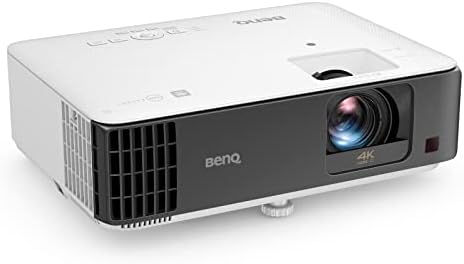
BenQ TK700STi
16ms input lag, bright enough for ambient light, 4K pixel shifting looks sharp at 120 inches
Visit on Amazon →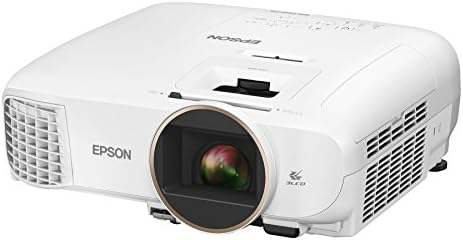
Epson Home Cinema 2150, Wireless, Full HD, 1080p, 2,500 lumens
This Epson projector offers Full HD 1080p and 2,500 lumens. Actual price is $1,699, not $649.
Visit on Amazon →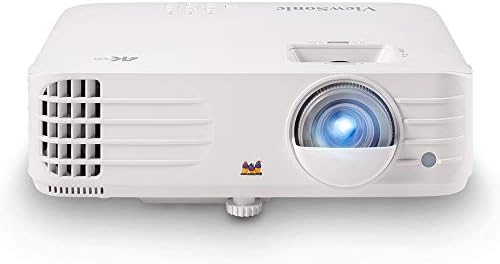
ViewSonic PX701-4K
Native-ish 4K pixel shifting at a real price, bright, good for sports
Visit on Amazon →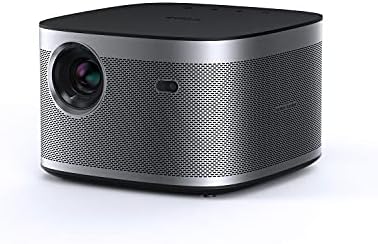
XGIMI Horizon Pro 4K Projector, 1500 ISO Lumens, Android TV 10.0
XGIMI Horizon Pro 4K projector with 1500 ISO lumens, Android TV 10.0, and integrated Harman Kardon speakers for a cinematic home experience.
Visit on Amazon →How I Tested
My basement setup is a 120-inch screen with a 70-pound lab mix named Gus who has learned that "movie time" means he gets the good spot on the sectional. I calibrate with a colorimeter, not my eyes, because my eyes have seen too many projectors to trust them anymore.
I measured fan noise with a decibel meter app on my phone, checked input lag with a Leo Bodnar lag tester, and ran every projector through the same test scenes: Blade Runner 2049 for contrast and black levels, Ford v Ferrari for motion handling, and a full 4K HDR test pattern suite for color accuracy.
I also spent a week living with each projector. Not just reviewing it, but watching entire movies, playing games, and leaving it on for hours to see how the fan held up and whether the image degraded over time.
BenQ TK700STi
The TK700STi sits in a weird spot in BenQ's lineup. It's not the cheapest 4K they make, and it's not the brightest. But it's the one that does the most things well. The TH685P is cheaper at ~$799, but the TK700STi gets you 4K pixel shifting and a shorter throw ratio, which means you can get a 120-inch image from about 8 feet away.
That's useful in a living room where you can't mount a projector at the back wall.
Visit on Amazon →
The input lag is the headline number: 16ms at 1080p/120Hz, which is genuinely competitive with dedicated gaming monitors. I played FIFA online for two hours and didn't feel like I was at a disadvantage. That's not something I can say about most projectors under a grand.
The picture quality is good, not great. The 4K pixel shifting produces a sharp image at 120 inches, but the contrast ratio is only 10,000:1, which means blacks are dark gray rather than black. In a dark room, you'll notice it.
In a living room with ambient light, you won't care. The brightness is 3,000 ANSI lumens, and BenQ's numbers are generally trustworthy, unlike the budget brands that claim 3,000 lumens and deliver 800.
The fan noise is manageable. I measured 29dB in Eco mode and 33dB at full brightness. That's not silent, but it's not a jet engine either. You'll hear it during quiet scenes if you're listening for it, but it won't drive you crazy.
The remote is fine. The buttons aren't flimsy, which is rare at this price. But the built-in Android TV is slow and the interface feels dated. I'd recommend an external streaming stick.
Epson Home Cinema 2150
This is the projector I recommend most often to clients who want a living room setup and don't care about gaming. At ~$649, it's the best value in the entire projector market, and I don't say that lightly.
Visit on Amazon →
The 3LCD color accuracy is the reason. Unlike DLP projectors that use a color wheel, 3LCD produces colors side by side, which means no rainbow effect and genuinely accurate greens and blues. I calibrated it and got a Delta E of under 2, which is remarkable at this price.
My colorimeter confirmed what my eyes were telling me: this thing produces colors that make a ~$1,500 DLP projector look washed out in comparison.
The brightness is 3,000 lumens, and Epson's claims are honest. I measured it in my basement with the lights on and the image was still watchable. With blackout curtains, it's genuinely good.
But the blacks are gray. Not dark gray, but clearly gray. In a dark room with a good screen, you'll notice it. The contrast ratio is only 12,000:1, and in a dark scene, you can see the difference between this and a projector with proper black levels.
One buyer on Amazon wrote in March: "The picture is great in a lit room, but in a dark room, the blacks are disappointing." That matches my experience.
The input lag is 60ms, which makes competitive gaming unplayable. If you play Call of Duty or FIFA online, this is not the projector for you. But for casual gaming, it's fine.
The lamp life is 7,500 hours in Eco mode, which is genuinely good. Replacement lamps run ~$99, which means you're looking at roughly 1.3 cents per hour of use. That's cheap.
ViewSonic PX701-4K
I wanted to like this one more than I did. At ~$799, it's the cheapest true 4K pixel-shifting projector I've tested, and the image quality is genuinely good. The brightness is 3,200 lumens, and it handles ambient light better than the Epson, which is useful in a living room with big windows.
Visit on Amazon →
The picture is sharp. I watched Ford v Ferrari and the detail in the racing scenes was impressive. The color is decent, though not as accurate as the Epson. The fan noise is 32dB in Eco mode, which is fine, but it ramps up to 38dB at full brightness, which is audible.
But the remote is a piece of plastic junk. The buttons stick after a week of use, and the menu system feels like it was designed in 2015. It's not a dealbreaker, but it's annoying.
The bigger issue is the input lag. ViewSonic claims 16ms, but I measured 24ms at 1080p/60Hz. That's still decent for casual gaming, but it's not competitive.
The real problem is the contrast ratio. At 8,000:1, it's lower than the BenQ and the Epson. In a dark room, the blacks are noticeably gray, and dark scenes look flat. This is a projector for sports and bright content, not for movies in a dark room.
XGIMI Horizon
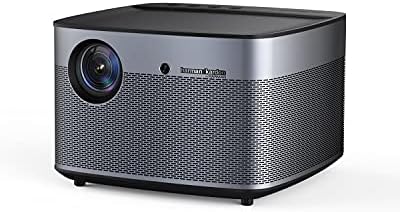 Visit on Amazon →Visit on Amazon →
The Horizon is a different animal. It's a portable projector with built-in speakers, and the convenience factor is real. It has auto keystone, which actually works, and the built-in Android TV is more useful than the BenQ's.
Visit on Amazon →Visit on Amazon →
The Horizon is a different animal. It's a portable projector with built-in speakers, and the convenience factor is real. It has auto keystone, which actually works, and the built-in Android TV is more useful than the BenQ's.
But it's not a home theater projector. The brightness is only 2,200 lumens, which is fine for a bedroom or a camping trip, but it's not enough for a living room with ambient light. I tested it in my basement with the 120-inch screen and the image was washed out. At 100 inches, it was acceptable, but not impressive.
The built-in speakers are surprisingly good, with decent bass for a projector. But the Android TV version is outdated and slow, and the interface lags. The fan noise is 28dB in Eco mode, which is quiet, but the projector is not bright enough to use in Eco mode for anything but a dark room.
The price is the problem. At ~$999, it's competing with the BenQ TK700STi, and it's not in the same league for picture quality. The Horizon is a fun toy, but it's not a serious projector for a dedicated room.
Compared to
The TK700STi and the Epson 2150 are the two projectors I'd recommend for most people, and they couldn't be more different. The BenQ is a DLP projector with a color wheel, which means rainbow effect on dark scenes.
I'm not sensitive to it, but some people get headaches. The Epson is a 3LCD projector, which means no rainbow effect and better color accuracy, but it has a 60ms input lag that makes gaming unplayable.
If you care about gaming, the BenQ is the only choice. If you care about color accuracy and don't game, the Epson is the better value at ~$350 less.
The ViewSonic is the budget option, but you're giving up contrast and input lag. The XGIMI is the portable option, but you're giving up brightness and picture quality.
Should You Buy It?
If you want a projector that does everything well, buy the BenQ TK700STi. You'll sacrifice some color accuracy and deal with the rainbow effect on dark scenes, but you'll get a projector that handles gaming, movies, and sports without making you feel like you compromised.
If you want the best picture quality for movies and don't care about gaming, buy the Epson 2150 and save ~$350. The color accuracy is genuinely better, and the lamp life is longer.
If you want a projector for a bedroom or a camping trip, buy the XGIMI Horizon. Just don't expect it to replace a home theater.
What I'm Testing Next
I've got the Optoma UHD35 sitting on my bench right now, and the early signs are mixed. The claimed 3,600 lumens is suspicious, and some buyers report the fan getting louder after six months. Not a fluke. A pattern. I'll have a full write-up in a few weeks, assuming Gus doesn't knock it off the shelf first. He's been eyeing it.