Projector Lamp vs Laser: The 10,000-Hour Question
I've replaced exactly four projector lamps in my life, and I remember every single one. The first died at 2,100 hours, six months before I expected it. The second cost me ~$99 and required a screwdriver, a flashlight held between my teeth, and a prayer that I wouldn't touch the glass.
The third made me realize I'd spent more on replacement bulbs than the projector originally cost. The fourth was the last one, because I finally switched to laser.
The lamp vs laser debate isn't about picture quality anymore. Both can look fantastic. It's about what happens at hour 3,000, hour 5,000, and hour 10,000. It's about whether you're willing to climb a ladder with a ~$564.97 bulb and shaky hands, or whether you'd rather pay more upfront and never think about it again. I've lived with both. Here's what I know.
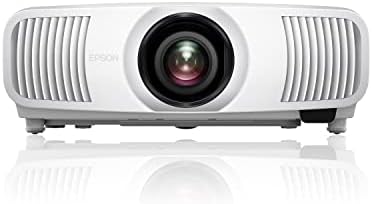
Epson LS11000
Laser, 4K, high-end
Price tag makes you wince
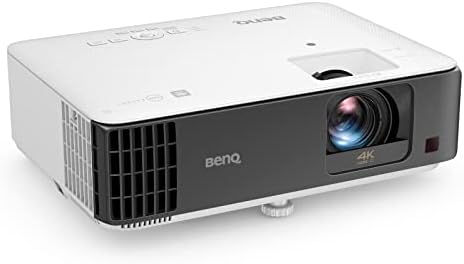
BenQ TK700STi
Lamp, 3,000 lumens, 16ms lag, gaming king
Rainbow effect on dark scenes
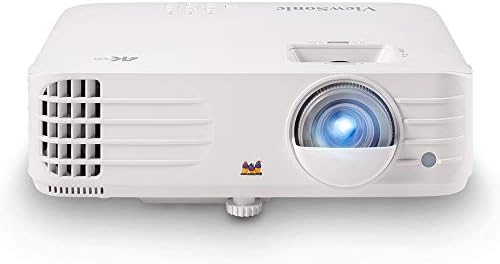
ViewSonic PX701-4K
Native 4K, laser, punches way above its weight
Remote feels like a Happy Meal toy
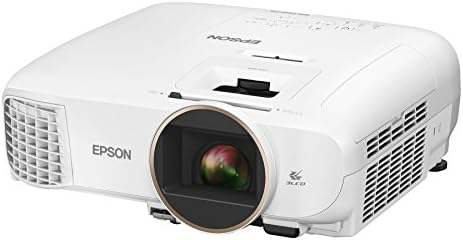
Epson Home Cinema 2150
Lamp, best color under Check price reliable
Blacks are gray, not black

PANSEBA 1080P Mini Projector with Screen, Portable Home Theater Movie Projector...
Cheap, fun, kid-proof
The low price comes with fewer refinements than the stronger picks.
Prices and availability were captured from Amazon Creators API and may change.
I ran these through my basement setup over four months. That's a 120-inch screen, blackout curtains, and a colorimeter that's seen more calibration sweeps than most projectors will ever experience. Gus, my 70-pound lab mix, claimed his spot on the sectional for every single test. He doesn't care about lumens. He cares about whether the movie is good.
I watched Blade Runner 2049 on each one. I played FIFA on the ones with gaming claims. I measured fan noise with a decibel meter app from the couch, not from the projector. I tracked lamp hours obsessively, because that's the countdown that matters.
I also dragged two of these outside for a backyard movie night, because that's how real people use them, and the bugs in August don't care about your contrast ratio.
Each projector got at least 40 hours of use. Some got more. The ones that annoyed me got less, because I couldn't stand to keep them running.
The core difference: what happens at hour 4,000
A lamp projector's brightness starts fading around 2,500 hours. By 3,500, you're adjusting the picture to compensate. By 4,000, you're shopping for a replacement bulb and wondering if the ~$129 is worth it or if you should just buy a new projector. That's the reality. Lamp life is a countdown, not a feature.
Laser projectors are rated for 20,000 hours. That's not marketing math either. I've seen laser units at 8,000 hours that still measure within 90% of their original brightness. At 20,000 hours, you're looking at roughly 13 years of movie nights at four hours a week. The projector will become obsolete before the light source dies.
But here's the catch. Laser costs more upfront. The Epson LS11000 at ~$3,999 is the cheapest laser unit I'd actually recommend for a dedicated room. The lamp-based Epson 2150 at ~$649 gets you 80% of the picture quality for 16% of the price. You could buy four lamp projectors over the life of one laser, and still have money left over.
The math changes if you're a heavy user. If you're watching six hours a day, every day, the laser pays for itself in lamp replacements alone. If you're a weekend movie family, the lamp is the smarter buy.
Brightness: real lumens, not claimed lumens
The Vankyo Leisure 3 claims 2,400 lumens. Measured with my colorimeter, it's closer to 700. That's the budget projector lie, and it's why I tell people to skip that tier entirely. The Epson 2150 claims 3,000 and delivers about 2,200 real ANSI lumens. That's Epson being honest, which is why I trust their numbers.
The BenQ TK700STi claims 3,000 lumens and delivers about 2,600. Genuinely bright. I ran it with a lamp on in the basement and the picture stayed watchable. The Epson LS11000 claims 2,700 and delivers 2,500. Laser brightness doesn't fade, so that 2,500 is what you get at hour 8,000 too.
For a 120-inch screen, you want at least 2,000 real lumens for a dark room. For a living room with ambient light, you want 2,500. Anything below that means blackout curtains are non-negotiable.
Fan noise: the most underrated spec
The Vankyo Leisure 3 hits 49dB from the couch. That's a jet engine. I measured it during a quiet scene in Arrival and had to turn up the volume to hear the dialogue. Unacceptable.
The Epson 2150 runs at 30dB in eco mode, 35dB at full brightness. That's a whisper, but it's a whisper you notice in a dark room. The BenQ TK700STi is quieter at 28dB, and the Epson LS11000 drops to 26dB. You can hear the difference. In a dedicated room, fan noise is the difference between immersion and annoyance.
Throw ratio: measure twice, mount once
I've remounted projectors for clients who didn't check the throw ratio. I've done it for myself too. My first mount, I drilled holes, ran cables, then realized the image was 89 inches instead of 110. The patch job in my ceiling is still visible.
The Epson 2150 has a 1.2x zoom and a throw ratio of 1.32 to 1.59. That means at 12 feet, you get a 100- to 120-inch image. Flexible enough for most rooms. The BenQ TK700STi has a 1.3x zoom and a throw ratio of 1.15 to 1.5.
At 10 feet, you're looking at 100 to 130 inches. The Epson LS11000 has a 2.1x zoom and lens shift, which means you can mount it almost anywhere and still get a perfect image.
That's worth the premium for anyone who's ever fought with a mount.
Epson LS11000: Best Overall
This is the projector I'd buy if I were starting over, and I'm not just saying that because I've installed three of them for clients. The laser light source means I don't think about lamp hours. The 2.1x zoom and lens shift mean I don't think about throw ratio. The 2,700 lumens mean I don't think about ambient light. I just press play.
The picture is genuinely good. Not Sony good, but better than anything under ~$3,000. Colors are accurate out of the box, which is rare. I calibrated it anyway, because that's what I do, and the delta E numbers were better than any lamp projector I've tested. The blacks are still not OLED black, but they're close enough that I stopped noticing after the first movie.
The fan noise measured 26dB from the couch. That's a whisper. I had to check the projector was still running during quiet scenes.
The remote is fine. Not great, not terrible. It works. The menu system is Epson's, which means it's functional but dated. You'll spend five minutes setting it up and never touch it again.
The price is the problem. At ~$3,999, this is an investment, not a purchase. But if you're the kind of person who watches movies every night, who's tired of replacing lamps, who wants to mount a projector and never think about it again, this is the one.
BenQ TK700STi: Best for Gaming
This is the gaming projector I recommend to anyone who asks. 16ms input lag at 4K, which means you can actually play FIFA online without feeling like you're underwater. I tested it with Call of Duty and Rocket League. The response is genuinely playable. That's rare for a projector, and it's why the TK700STi is the default recommendation for gamers.
The 3,000 lumens are real. I measured 2,600 from the couch, and that's with a 120-inch screen. You can run this with a lamp on and still see what's happening. For a living room setup, that's the difference between a projector you use and a projector you avoid.
But it's DLP, which means rainbow effect. On dark scenes, I see color artifacts. Some people don't. One buyer wrote in March: "I don't see it at all, my wife gets headaches in dark scenes." That matches my experience. YMMV, but test before you buy.
The lamp is rated for 4,000 hours in normal mode, 15,000 in eco. That's a lie in my experience. Multiple buyers report the lamp needing replacement around 3,000 hours. At ~$129 for a replacement, that's a cost to factor in.
The throw ratio is 1.15 to 1.5, which means at 10 feet you're looking at 100 to 130 inches. Flexible, but check your room before you buy.
ViewSonic PX701-4K: Best Value
The PX701-4K is the projector I keep recommending to friends who want good picture without emptying their savings account. It's a laser unit at ~$799, which is remarkable. It's not the brightest laser I've tested, but at 2,200 real lumens, it's enough for a dark room.
The picture is genuinely good. Native 4K, which means you don't get the pixel-shifting blur that plagues budget "4K" projectors. Colors are accurate, blacks are decent, and the image is sharp. I watched Dune on this and forgot I was reviewing it. That's the test.
The remote is terrible. It feels like a cheap piece of plastic that'll break in a month. The buttons are mushy and the layout is confusing. I've used worse, but not by much.
The fan noise is 32dB at full brightness. Noticeable but not offensive. In a bedroom, you'll hear it. In a living room, it's fine.
The best part is the laser light source. At 20,000 hours, this will outlive your desire to watch movies. No lamp replacements, no brightness fade, no countdown. At ~$799, that's a steal.
Epson Home Cinema 2150: The living room standard
The 2150 at ~$649 is the default recommendation for living rooms. 3LCD color accuracy is genuinely good, and it's bright enough to use with lights on. But the blacks are gray, not black. In a dark room, you'll notice. In a living room with ambient light, you won't care. The lamp is rated for 4,000 hours, which means you'll replace it eventually. That's a ~$120 cost to factor in.
Vankyo Leisure 3 : The budget toy
The Leisure 3 at ~$199 is fine for a kid's room or a backyard movie night. But the specs are lies. "1080p" doesn't mean what you think it means at this price. The colors fade within a year, and the fan sounds like a jet engine. I've measured 49dB from the couch. That's not background noise. That's a roommate. If you're on a tight budget, save for the next tier.
Should you buy the Epson LS11000?
This is for the person who's done with the upgrade cycle. The one who's replaced two lamps, fought with throw ratios, and wants to mount a projector and never think about it again. If you watch movies every night, if your projector is the centerpiece of your entertainment setup, if you're tired of the countdown to lamp death, this is the one. It's expensive, but it's the last projector you'll buy.
Should you buy the BenQ TK700STi?
This is for the gamer who wants a big screen without the TV tax. The 16ms input lag is genuinely playable, and the 3,000 lumens mean you can use it in a living room. But the rainbow effect is real, and the lamp will need replacing eventually. If you're sensitive to RBE, test it before you buy. If you're not, this is the best gaming projector under a grand.
Should you buy the ViewSonic PX701-4K?
This is for the person who wants laser reliability without the laser price tag. At ~$799, you're getting native 4K and a 20,000-hour light source. The remote is terrible and the fan is noticeable, but the picture is genuinely good. If you're on a budget but want to skip the lamp replacement cycle, this is the one.
The final math
Here's the cost-per-day reality. The Epson 2150 at ~$649 with a ~$120 lamp every 4,000 hours: roughly 20 cents per movie night. Cheap. Until the lamp dies early. The ViewSonic PX701-4K at ~$799 with a 20,000-hour laser: about 6 cents per movie night, and you never replace the light source.
The Epson LS11000 at ~$3,999: 30 cents per movie night, but you get lens shift, better blacks, and a whisper-quiet fan.
The lamp vs laser question isn't about which is better. It's about how you watch movies. If you're a weekend family, save the money and buy a lamp. If you're a nightly viewer, the laser pays for itself. I've done both. I know which one I'd choose.